 Tired of fish tacos? Want to eat something that'll put up a fight? Check out my latest post on D.C. Foodies.
Saturday, October 18, 2008
El Leviathan, esse!!
Tired of fish tacos? Want to eat something that'll put up a fight? Check out my latest post on D.C. Foodies.

Thursday, October 16, 2008
It's not pumpkin. It's Scottish!

In a season of pumpkin ales, Duck-Rabbit’s Wee Heavy Scotch Style Ale is a nice change of pace.
The six-pack was a blind grab at Sam’s Quik Shop as the missus and I headed home from Durham, N.C., after the World Beer Festival. The carton merely said the beer was a seasonal, but I’ve sampled Duck-Rabbit enough times to trust that whatever the seasonal was would be decent. Besides, I’m always attracted to limited edition beers.
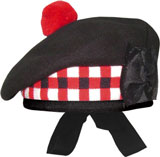
Because it’s fall, I assumed I was buying a six-pack of pumpkin ale, but was tickled to see the plaid Balmoral cap perched atop the duck-rabbit.
The dark, amber colored ale is somewhat sweet (thanks to the 8 percent alcohol content) with a rich, slightly spicy finish.
The wee heavy is a great strong ale to sip on the air gets crisp and the temperature starts to fall. But if you don't live in North Carolina, you're out of luck. In that case, consider other Scottish ales like Skull Splitter, Belhaven's Wee Heavy or Old Chub Scottish Style Ale from Oskar Blues, any of which will do just as well.
Still want pumpkin? Bake a pie.
The six-pack was a blind grab at Sam’s Quik Shop as the missus and I headed home from Durham, N.C., after the World Beer Festival. The carton merely said the beer was a seasonal, but I’ve sampled Duck-Rabbit enough times to trust that whatever the seasonal was would be decent. Besides, I’m always attracted to limited edition beers.
Because it’s fall, I assumed I was buying a six-pack of pumpkin ale, but was tickled to see the plaid Balmoral cap perched atop the duck-rabbit.
The dark, amber colored ale is somewhat sweet (thanks to the 8 percent alcohol content) with a rich, slightly spicy finish.
The wee heavy is a great strong ale to sip on the air gets crisp and the temperature starts to fall. But if you don't live in North Carolina, you're out of luck. In that case, consider other Scottish ales like Skull Splitter, Belhaven's Wee Heavy or Old Chub Scottish Style Ale from Oskar Blues, any of which will do just as well.
Still want pumpkin? Bake a pie.

Saturday, October 11, 2008
Who's the Big Boss?

I know. I know. It's a terrible pun. But it illustrates my point: too many people know too little about North Carolina's craft brewing scene.
That scene includes Big Boss, one of the best breweries in North Carolina, if not the East Coast.
I've been a beer fan for years, but it wasn't until I moved to Chapel Hill, N.C., that I became a craft beer enthusiast. It was breweries like Foothills, Carolina Brewing Company, Duck-Rabbit and Big Boss that showed me why craft brewing is such a special endeavor.
Think about it like this: Anheuser-Busch brews millions of gallons of Budweiser in a state-of-the-art plant in St. Louis, Mo. Basically, it's beer by HAL. Big Boss Brewing Company is a group of guys brewing beer in a warehouse in Raleigh.
The warehouse is also home to Big Boss' brewpub, Horniblows Tavern (admit it, you love the name).
Despite being located in an industrial park in north Raleigh, Horniblows is one of the best bars in the city. It better be, it's a pain in the ass to get to.
Earlier this year, the missus and I swung by Horniblows with our friend Val. After a couple wrong turns, we pulled into Horniblows' parking lot, a bar closer to a tire store than another watering hole. If it weren't for a trailer parked out front with the Big Boss logo painted on the side, we would've driven right by the place.

It's a good thing we didn't. Inside, the industrial park gives way to a dimly lit, dark wood bar. And as you'd expect at a brewpub, where the mash tun is churning away in the next room, the selection of beer is tempting and unique.
In addition to Big Boss' popular Bad Penny Brown, Hell's Belle and Angry Angel lines, Horniblows had a Holly Roller II IPA and its Belgian style Surrender Monkey Farm House Ale on draft.

They also had Galaga.

Last weekend, Big Boss brought its seasonal creation -- Black Diamond Express -- to the World Beer Festival in Durham.

Black Diamond is an IPA infused with blackberries. As horrible as that sounds to someone who hates fruit-flavored beers (me), Black Diamond is a solid beer. The blackberries are a subtle compliment to the hoppy flavor of the IPA. If more breweries would take such a restrained approach to fruit flavors, their fruity beers might turn out better (looking at you, Abita).
Toss in the quality beers, a great bar, and friendly staff eager to show off their beers, and it's easy to like Big Boss and the craft beer scene.
But here's the rub: unless you live in North Carolina, Hell's Belle, Angry Angel and the rest of the craft beers brewed in North Carolina are out of your reach. Hopefully, as the craft beer scene continues to grow and evolve, more great beers become more widely available.
In the meantime, I'll be loading the trunk every time I visit the Tar Heel state.

Tuesday, October 7, 2008
Fat Tire rolls into Durham
 So that’s what all the fuss is about.
Fat Tire, the beloved beer of so many and the long-for beer of so many others, was one of the new beers at this year’s World Beer Festival in Durham, N.C.

And you know, it ain’t too bad.
For years I’ve read about the beer brewed in Ft. Collins, Colo. On message boards, those who've had it swear by it and lament the fact that they can’t get it once they move east. For folks like me who have never traveled to Colorado, such talk creates curiosity. What is it about this beer that makes so many people long for it? There are a lot of beers brewed in Colorado that are available nationally, so why all the fuss over Fat Tire?
During the Brewers Association’s Savor event in D.C. last February, I asked Kim Jordan, the head of New Belgium Brewing, if she planned to distribute Fat Tire any further east than Tennessee. Not at the moment, she said. If I was that interested, she invited me to visit the brewery.
Fortunately, I didn’t have to travel that far (though a trip to Colorado wouldn’t be a bad thing). New Belgium set up a booth at the Durham festival and brought its famous beer. Though the brewery was at the back of the festival site, it was my first stop. And the charming couple working the booth was more than happy to put up with my picture taking and questions.
Like I said, Fat Tire is a pretty solid ale. And as a former North Carolina resident and fan of the many breweries in the Triangle and across the Tar Heel state, I understand where Fat Tire’s fans are coming from.
For years I’ve read about the beer brewed in Ft. Collins, Colo. On message boards, those who've had it swear by it and lament the fact that they can’t get it once they move east. For folks like me who have never traveled to Colorado, such talk creates curiosity. What is it about this beer that makes so many people long for it? There are a lot of beers brewed in Colorado that are available nationally, so why all the fuss over Fat Tire?
During the Brewers Association’s Savor event in D.C. last February, I asked Kim Jordan, the head of New Belgium Brewing, if she planned to distribute Fat Tire any further east than Tennessee. Not at the moment, she said. If I was that interested, she invited me to visit the brewery.
Fortunately, I didn’t have to travel that far (though a trip to Colorado wouldn’t be a bad thing). New Belgium set up a booth at the Durham festival and brought its famous beer. Though the brewery was at the back of the festival site, it was my first stop. And the charming couple working the booth was more than happy to put up with my picture taking and questions.
Like I said, Fat Tire is a pretty solid ale. And as a former North Carolina resident and fan of the many breweries in the Triangle and across the Tar Heel state, I understand where Fat Tire’s fans are coming from.
If I could get sixers of Foothills and Big Boss here in D.C., maybe I wouldn't be as enamored with them. After all, we tend to want what we can’t have. Or maybe they're really as good as I think they are. Of course, taste is relative.
During the festival I heard rumors that New Belgium is considering making Fat Tire and its other beers available on the East Coast. I’d be tickled if they did. But I also wonder whether doing so would deflate Fat Tire’s mystique.
Now, New Belgium wasn’t the only new face at the festival. One of Utah’s very few breweries, Uinta Brewing Company, showed up with a half dozen offerings from its product line, including its Angler Pale Ale. Despite coming from a state known more for Mormons and teetotaling, Uinta produces a quality beer. And unlike New Belgium, I’ve already seen Uinta’s beers show up around D.C.
During the festival I heard rumors that New Belgium is considering making Fat Tire and its other beers available on the East Coast. I’d be tickled if they did. But I also wonder whether doing so would deflate Fat Tire’s mystique.
Now, New Belgium wasn’t the only new face at the festival. One of Utah’s very few breweries, Uinta Brewing Company, showed up with a half dozen offerings from its product line, including its Angler Pale Ale. Despite coming from a state known more for Mormons and teetotaling, Uinta produces a quality beer. And unlike New Belgium, I’ve already seen Uinta’s beers show up around D.C.


And now, the rest of the rest from the festival. Normally, there would be more photos, but my battery died and using my camera phone got old fast.


 (
(
 (
(
 (
(

Sunday, October 5, 2008
Of honeymoon and murder
 Cute, huh? They're dead now. I killed them. I grilled them. Then I ate them and fed 13 of their friends to my friends and loved ones. Strangely enough, the whole experience reminded me of my honeymoon. Check it out at D.C. Foodies.
Sunday, September 21, 2008
Der Godzilla!! ... killer potato salad ... and beer

Check out my latest grilling post on D.C. Foodies. I grilled a 5-foot bratwurst, made the best potato salad you've never had and cracked open a couple of excellent Oktoberfest beers. Enjoy (I did).
Tuesday, September 16, 2008
A helping hand and a bowl of gumbo

Regretfully, this is my final food column for the Times-News. Due to budget constraints, the newspaper was forced to drop my column. So it goes in the newspaper industry these days.
Gulf Coast gave us gumbo, now we can return the favor
Talk about timing.
Weeks ago, I decided to do this month’s column on gumbo. Not only was I going to extol the many virtues of the classic bayou dish, but I would use the column to remind people about the difficulties the folks down on the Gulf Coast still face three years after Hurricane Katrina.
Gustav and Ike took care of that for me.
As if to mark Katrina’s three-year anniversary, Gustav rolled over the Louisiana coast reminding residents and the rest of us that life on the Gulf Coast can get pretty rough. Last week, Hurricane Ike pounded Texas.
To heck with the gators and snakes, it’s Mother Nature that you have to watch out for down there.
Fortunately, generations of immigrants, Indians, slaves, settlers and a few pirates weathered the storms and cultivated a culture as uniquely American as it is unique. And from that culture, gumbo was born – a savory soup of ingredients and influences that is the mother dish of the American Gulf Coast.
Louisiana and the city of New Orleans may be the birthplace of gumbo, but pots of that delicious dark concoction can be found bubbling away in homes and restaurants from Pensacola, Fla., to Port Arthur, Texas.
But New Orleans is the epicenter. The French influenced, former Spanish port town attracted people from all over the world. Thankfully, these people brought with them a myriad of tastes and cooking techniques, and deposited them in the Big Easy. From the roux that forms the base of the gumbo (a French technique), to the filé powder that seasons it at the end (thanks to the Choctaw Indians), gumbo is the result of this conflagration of influences.
Oh, and let's not forget about the hot sauce. We can thank the Africans, Caribbean islanders and, of course, Edmund McIlhenny, inventer of Tabasco sauce, for that.
Aside from the roux and the "trinity" (onion, celery and green bell pepper), which make up the base of all gumbos, there are a number of ways to make the dark, rich soup. More often than not, I make a seafood gumbo using a dark roux made from flour and bacon fat. Right before I ladel the gumbo into waiting bowls of steaming rice, I load the pot with fresh crab meat, oysters, shrimp, and if I can find them, mudbugs (crawfish).
Technically, I should use a light roux with seafood (and a dark roux with meat), but no one seems to complain. I think it's because of the bacon.
If seafood isn’t your thing, consider making an andouille sausage and chicken gumbo, or gumbo ya-ya with hard-boiled or poached eggs.
Of all the meals that I’ve made and received – and there have been a lot of them – gumbo is by far my favorite. No dish is as unique and few as delicious. Every bowl reminds me of the last one I ate and makes me look forward to the next.
There is no other dish like it and there is no culture like the one that gave it to us.
So when Hurricane Katrina buried New Orleans and much of the Gulf Coast in debris and flood water, my heart went out to the millions of victims. Here at The Times-News, we launched Operation Gulfport to support the people of Gulfport, Miss., who were as affected by Katrina as anyone. Many of us also dug deeper to help other communities, including New Orleans, which became the face of the storm’s aftermath.
In time, the flood waters receded and life slowly moved toward normalcy. However, life on the Gulf Coast hasn't reached normal yet. National Guard troops still patrol New Orleans' empty neighborhoods and the rebuilding – and repopulation – is far from complete.
Thanks to Gustav and Ike, there’s even more work to do – in Louisiana and Texas.
As before, our attention will soon turn back to the presidential election and the odds and ends that make up every day life. But before we completely forget about the folks on the Gulf Coast, consider supporting one of the many charities helping residents rebuild their communities and their lives.
The following are just a few aid organizations helping folks in Louisiana and Texas:
Talk about timing.
Weeks ago, I decided to do this month’s column on gumbo. Not only was I going to extol the many virtues of the classic bayou dish, but I would use the column to remind people about the difficulties the folks down on the Gulf Coast still face three years after Hurricane Katrina.
Gustav and Ike took care of that for me.
As if to mark Katrina’s three-year anniversary, Gustav rolled over the Louisiana coast reminding residents and the rest of us that life on the Gulf Coast can get pretty rough. Last week, Hurricane Ike pounded Texas.
To heck with the gators and snakes, it’s Mother Nature that you have to watch out for down there.
Fortunately, generations of immigrants, Indians, slaves, settlers and a few pirates weathered the storms and cultivated a culture as uniquely American as it is unique. And from that culture, gumbo was born – a savory soup of ingredients and influences that is the mother dish of the American Gulf Coast.
Louisiana and the city of New Orleans may be the birthplace of gumbo, but pots of that delicious dark concoction can be found bubbling away in homes and restaurants from Pensacola, Fla., to Port Arthur, Texas.
But New Orleans is the epicenter. The French influenced, former Spanish port town attracted people from all over the world. Thankfully, these people brought with them a myriad of tastes and cooking techniques, and deposited them in the Big Easy. From the roux that forms the base of the gumbo (a French technique), to the filé powder that seasons it at the end (thanks to the Choctaw Indians), gumbo is the result of this conflagration of influences.
Oh, and let's not forget about the hot sauce. We can thank the Africans, Caribbean islanders and, of course, Edmund McIlhenny, inventer of Tabasco sauce, for that.
Aside from the roux and the "trinity" (onion, celery and green bell pepper), which make up the base of all gumbos, there are a number of ways to make the dark, rich soup. More often than not, I make a seafood gumbo using a dark roux made from flour and bacon fat. Right before I ladel the gumbo into waiting bowls of steaming rice, I load the pot with fresh crab meat, oysters, shrimp, and if I can find them, mudbugs (crawfish).
Technically, I should use a light roux with seafood (and a dark roux with meat), but no one seems to complain. I think it's because of the bacon.
If seafood isn’t your thing, consider making an andouille sausage and chicken gumbo, or gumbo ya-ya with hard-boiled or poached eggs.
Of all the meals that I’ve made and received – and there have been a lot of them – gumbo is by far my favorite. No dish is as unique and few as delicious. Every bowl reminds me of the last one I ate and makes me look forward to the next.
There is no other dish like it and there is no culture like the one that gave it to us.
So when Hurricane Katrina buried New Orleans and much of the Gulf Coast in debris and flood water, my heart went out to the millions of victims. Here at The Times-News, we launched Operation Gulfport to support the people of Gulfport, Miss., who were as affected by Katrina as anyone. Many of us also dug deeper to help other communities, including New Orleans, which became the face of the storm’s aftermath.
In time, the flood waters receded and life slowly moved toward normalcy. However, life on the Gulf Coast hasn't reached normal yet. National Guard troops still patrol New Orleans' empty neighborhoods and the rebuilding – and repopulation – is far from complete.
Thanks to Gustav and Ike, there’s even more work to do – in Louisiana and Texas.
As before, our attention will soon turn back to the presidential election and the odds and ends that make up every day life. But before we completely forget about the folks on the Gulf Coast, consider supporting one of the many charities helping residents rebuild their communities and their lives.
The following are just a few aid organizations helping folks in Louisiana and Texas:
- Louisiana Disaster Recovery Foundation
- Café Reconcile
- United Way
- Second Harvest Food Bank of Greater New Orleans and Acadiana
- American Red Cross
- Federal Emergency Management Agency
Alabama Seafood Gumbo
(Adapted from Jessie Tirsch's "A Taste of the Gulf Coast")
(Makes 12 generous servings)
I've made this recipe more times than I can count. There are other ways to make gumbo, but this is a good one. For this batch, I threw in one soft shell crab per serving and added a whack of Tabasco sauce, as always.
8 strips of bacon, diced
¼ cup all-purpose flour
4 cups finely chopped onions (about 4 large)
1 cup finely chopped green bell peppers (about 1 large)
1 tbs. minced garlic (6 medium cloves)
3 cups chopped okra (about ¾ pounds)
5 cups peeled, chopped plum tomatoes
4 bay leaves
1 tbs. salt
5 turns freshly ground black pepper
¼ tsp. cayenne pepper
(Adapted from Jessie Tirsch's "A Taste of the Gulf Coast")
(Makes 12 generous servings)
I've made this recipe more times than I can count. There are other ways to make gumbo, but this is a good one. For this batch, I threw in one soft shell crab per serving and added a whack of Tabasco sauce, as always.
8 strips of bacon, diced
¼ cup all-purpose flour
4 cups finely chopped onions (about 4 large)
1 cup finely chopped green bell peppers (about 1 large)
1 tbs. minced garlic (6 medium cloves)
3 cups chopped okra (about ¾ pounds)
5 cups peeled, chopped plum tomatoes
4 bay leaves
1 tbs. salt
5 turns freshly ground black pepper
¼ tsp. cayenne pepper
1 1/2 quarts chicken stock
2 pounds medium shrimp, peeled and deveined
1 pound lump crab meat
1 pound freshly shucked oysters, with their liquor
Tabasco to taste (optional)
12 soft shell crabs (optional)
12 cups hot cooked long-grain white rice (3 cups uncooked)
2 pounds medium shrimp, peeled and deveined
1 pound lump crab meat
1 pound freshly shucked oysters, with their liquor
Tabasco to taste (optional)
12 soft shell crabs (optional)
12 cups hot cooked long-grain white rice (3 cups uncooked)

Place a large, heavy pot, preferably cast iron, over medium-low heat until hot. Add the bacon, stirring constantly, until the bacon is crisp and the fat is rendered, 5 to 6 minutes.

Discard the bacon. Add the flour and cook, stirring and scraping the bottom of the pot constantly, until the roux is a deep cocoa color, 7 to 8 minutes. (Be careful not to splatter yourself with the hot roux.)


Stir in the onions, bell peppers, celery and garlic – the mixture will get clumpy as the roux suddenly cools. Increase the heat to medium and cook, stirring and scraping frequently to keep the flour from sticking, until the onions are tender and golden, about 15 to 20 minutes.
Increase the heat to medium-high. Stir in the okra and cook, stirring frequently, until the liquid from the okra stops oozing, about 2 minutes. Stir in the tomatoes, bay leaves, salt, black pepper and cayenne (and Tabasco if you like).
Stir in the stock and bring to a boil. Cover partially and reduce the heat to low. Cook, stirring occasionally, until the soup is thickened and the vegetables are tender, about 1 hour.
Increase the heat to medium-high. Stir in the okra and cook, stirring frequently, until the liquid from the okra stops oozing, about 2 minutes. Stir in the tomatoes, bay leaves, salt, black pepper and cayenne (and Tabasco if you like).
Stir in the stock and bring to a boil. Cover partially and reduce the heat to low. Cook, stirring occasionally, until the soup is thickened and the vegetables are tender, about 1 hour.
 Increase the heat to medium-high. (If you're including the soft shell crabs, add them in and cook for 5 minutes.) Add the shrimp and crabmeat, being careful not to break up the crabmeat as you stir it into the gumbo, and simmer just until the shrimp turn pink, about 1 minute. Right before serving, stir in the oysters and their liquor, and cook just until the edges curl, about 1 to 2 minutes.
Serve in shallow bowls over rice.

Subscribe to:
Posts (Atom)